

Blog
Traditional Weaving Techniques of Elampillai Sarees

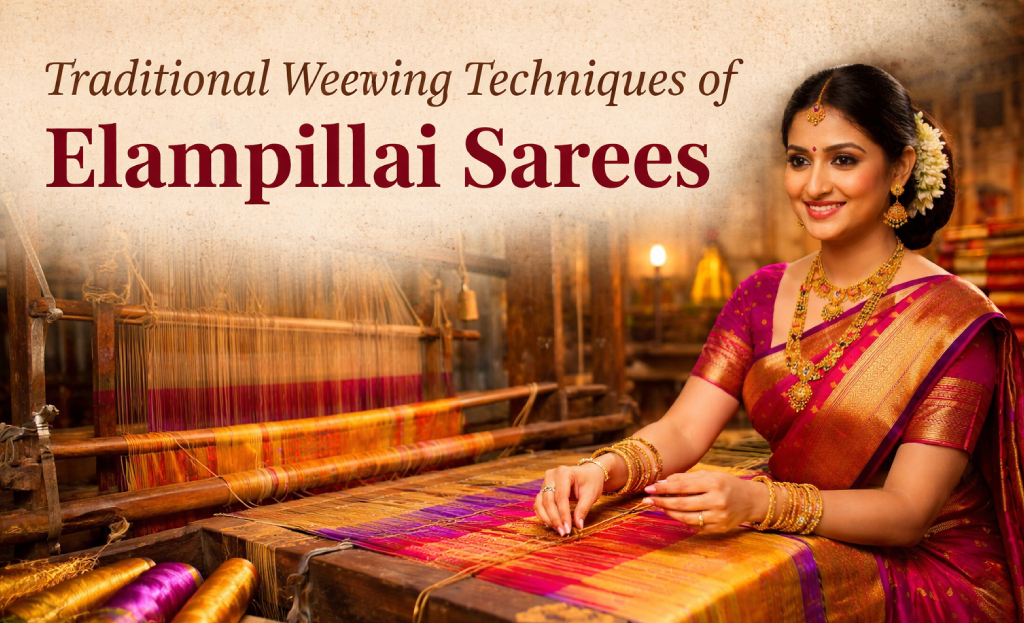
Elampillai sarees are a beautiful example of Tamil Nadu’s rich textile heritage. Originating from Elampillai, a town in the Salem district, these sarees are admired for their elegant designs, soft texture, and traditional weaving craftsmanship. The weaving techniques used in Elampillai sarees have been passed down through generations of skilled artisans, making them an important part of South Indian handloom traditions.
Unlike mass-produced fabrics, Elampillai sarees are often woven using traditional methods that preserve the authenticity and beauty of Indian textile art. These sarees are known for their graceful drape, vibrant colors, and elegant borders that reflect the cultural richness of Tamil Nadu.
In this article, we explore the traditional weaving techniques behind Elampillai sarees and why they continue to hold a special place in the world of South Indian silk sarees.
The Heritage of Elampillai Weaving
The town of Elampillai has long been recognized as an important weaving center in Tamil Nadu. For many decades, local weavers have specialized in producing sarees that combine traditional craftsmanship with contemporary styles.
The weaving community in this region works with dedication and skill, ensuring that every saree reflects the heritage of South Indian textile artistry. Many families in Elampillai have been involved in saree weaving for generations, making the craft not just a profession but a cultural legacy.
Elampillai sarees gained popularity because they offer the beauty of traditional silk sarees while being comfortable and suitable for everyday wear as well as festive occasions.
Handloom Weaving Process
One of the most important aspects of Elampillai sarees is the handloom weaving process. Traditional looms are used by skilled artisans to create intricate patterns and elegant designs.
The process begins with preparing the yarn, which is carefully selected and dyed to achieve vibrant colors. The yarn is then arranged on the loom, where the weaver skillfully interlaces threads to form the saree fabric.
Handloom weaving allows artisans to create unique textures and designs that are difficult to replicate using machine production. This method also gives the saree a distinctive softness and durability.
Zari Border Weaving
Another defining feature of Elampillai sarees is their zari borders. Zari refers to metallic threads, often gold or silver colored, that are woven into the fabric to create decorative patterns.
In traditional weaving, zari threads are incorporated into the saree border during the weaving process. This requires precision and experience, as the weaver must maintain consistent tension while integrating the metallic threads into the silk or cotton base.
The result is a saree with a rich border that enhances its elegance and makes it suitable for weddings and festive occasions.
Motifs and Design Patterns
Elampillai sarees often feature traditional motifs inspired by nature, temple architecture, and cultural symbols. These motifs are carefully woven into the fabric to create visually appealing designs.
Common design patterns include:
-
Floral motifs
-
Geometric patterns
-
Temple-inspired borders
-
Traditional zari designs
These motifs not only add beauty to the saree but also reflect the cultural identity of South Indian textile traditions.
Color Dyeing Techniques
Color plays a vital role in the appeal of Elampillai sarees. Traditional dyeing techniques are used to achieve rich and vibrant shades that remain long-lasting.
Weavers often use a combination of traditional and modern dyeing methods to produce colors such as deep red, royal blue, emerald green, and golden yellow. These shades are popular for festive and wedding sarees.
Careful dyeing ensures that the fabric retains its softness and brightness even after multiple washes.
Modern Adaptations in Elampillai Sarees
While traditional weaving techniques remain the foundation of Elampillai sarees, modern adaptations have also influenced their design. Today, weavers experiment with new color combinations, lightweight fabrics, and contemporary patterns to meet the preferences of modern saree buyers.
These innovations allow Elampillai sarees to remain relevant in the evolving fashion landscape while still preserving their traditional identity.
Conclusion
The traditional weaving techniques of Elampillai sarees highlight the craftsmanship and dedication of Tamil Nadu’s weaving community. From handloom weaving and zari border work to intricate motifs and vibrant dyeing techniques, each saree reflects a blend of heritage and artistry.
Elampillai sarees continue to be a popular choice for women who appreciate traditional South Indian silk sarees with elegance and comfort. By supporting authentic collections from trusted brands like Ponvastra, customers can experience the beauty of handcrafted sarees while helping preserve India’s rich weaving traditions.
FAQ
What makes Elampillai sarees unique?
Elampillai sarees are known for their traditional handloom weaving, elegant zari borders, and vibrant colors that reflect South Indian textile heritage.
Where are Elampillai sarees woven?
These sarees are traditionally woven in Elampillai, a town in the Salem district of Tamil Nadu.
Are Elampillai sarees made using handloom techniques?
Yes, many Elampillai sarees are created using traditional handloom weaving methods by skilled artisans.
What type of fabric is used in Elampillai sarees?
Elampillai sarees are typically made using silk, cotton, or silk-blend fabrics that provide both elegance and comfort.
Where can I buy authentic Elampillai sarees?
Authentic Elampillai sarees can be purchased through trusted saree stores and curated collections offered by brands like Ponvastra.